


Instinctual Zones Explained: The Imprint of Wolf Behaviors Driving Your Dog’s Intuition Today


Domestic dogs may sleep on our couches, follow us from room to room, and curl up at our feet—but beneath every wagging tail lives a blueprint written long before the first dog ever joined a human fire. That blueprint is the wolf. And even though thousands of years of domestication have softened the edges of the gray wolf’s survival instincts, the core behavioral framework remains intact.
Understanding this framework—especially the three instinctual zones dogs operate within—gives owners a powerful lens for interpreting behavior, preventing conflict, and strengthening the human‑dog bond. These zones are the Public Zone, Neutral Zone, and Core Zone, and each one activates a different layer of your dog’s inherited wolf intuition.

This article, “Instinctual Zones Explained: The Imprint of Wolf Behaviors Driving Your Dog’s Intuition Today,”explores how these zones shape your dog’s decisions, reactions, and emotional responses. Whether you’re raising a puppy, managing a confident adolescent male, or supporting a mature dog through changing environments, understanding these instinctual layers will transform the way you communicate and lead.
Understanding the Wolf Within the Modern Dog
Dogs are not wolves—but they are of wolves. Their behaviors, especially in unfamiliar or high‑stimulus environments, are guided by instincts that once kept their ancestors alive. Modern research on wolf behavior, such as the territorial studies published by the National Park Service, shows how deeply wolves rely on spatial awareness, hierarchy, and environmental scanning to survive. These same instincts appear in dogs today, though softened and reshaped by domestication.
When your dog barks at the window, hesitates before approaching a new dog, or becomes more affectionate at home than in public, he isn’t being dramatic—he’s following an ancient operating system.
To understand that system, we start with the three instinctual zones.
The Three Instinctual Zones That Shape Canine Behavior
1. The Public Zone: Where Instinct Meets Uncertainty
The Public Zone includes everything outside your dog’s known territory—sidewalks, parks, busy streets, veterinary offices, and any place filled with unfamiliar scents, dogs, or people. In this zone, your dog’s wolf ancestry is most visible.
Heightened Awareness and Environmental Scanning
In the wild, wolves treat the outer edges of their territory as high‑alert zones. They scan for rival packs, predators, and potential threats. Domestic dogs mirror this behavior through:
Upright posture
Forward ears
Increased sniffing
Slower, more deliberate movement
Even the friendliest dog becomes more vigilant in the Public Zone because his instincts tell him this is the zone of the unknown. The public zone is led- through vigilance and fight or flight instincts.

Posturing and Social Signaling
Male dogs, in particular, may stand taller, raise their tails, or widen their stance. These behaviors aren’t about aggression—they’re about communication. Wolves use similar postures to signal confidence or caution when encountering unfamiliar animals.
Scent Marking as a Territorial Declaration
Wolves mark the edges of their territory to announce their presence. Dogs do the same, even if the “territory” is a lamp post in a town they’ve never visited. This behavior is instinctual, not intentional.
Why This Matters for Owners
Understanding the Public Zone helps owners anticipate reactions. A dog who is calm at home may become more reactive or cautious in public simply because his instincts are activated. Recognizing this allows you to lead with confidence and prevent overstimulation.
2. The Neutral Zone: Shared Space, Shared Rules
The Neutral Zone includes semi‑familiar areas—places your dog visits often but does not “own.” This might include a favorite walking trail, a friend’s yard, or a dog‑friendly store. In wolf terms, this is overlapping territory where multiple packs may travel.
Balanced Confidence and Caution
In this zone, dogs are more relaxed than in the Public Zone, but they’re still tuned in to social dynamics. They may greet familiar dogs politely, having learned their scent and categorized them as non‑threatening. With known dogs and smells, your dog may shift into play, exploration, or curious investigation.
However, they remain ready to negotiate hierarchy when needed. If a dog approaches whose scent your dog has not previously registered, the social order will be established through natural canine behaviors and body language.
Social Diplomacy and Rituals
Wolves rely on ritualized greetings—sniffing, circling, and reading body language—to avoid unnecessary conflict. Dogs mirror this behavior through:
Sniffing the ground before approaching
Curving their bodies instead of approaching head‑on
Pausing to assess another dog’s posture
These rituals are not random; they are inherited survival strategies.

Mild Territorial Displays
Even though the Neutral Zone isn’t “home,” dogs may still mark, block, or position themselves between their owner and another dog. This is not dominance—it’s instinctual resource management.
Why This Matters for Owners
The Neutral Zone is where training shines. Dogs are alert enough to learn but not overwhelmed. It’s the ideal environment for reinforcing social skills, practicing leash manners, and building confidence.
3. The Core Zone: Home, Family, and the Heart of Instinct
The Core Zone is the dog’s inner circle—your home, your yard, your family, and anything your dog considers “his.” This is the wolf’s den, the safest and most protected space in the pack’s territory.
Territorial Protection and Boundary Awareness
Wolves fiercely protect the den. Domestic dogs inherit this instinct, which is why even gentle dogs may bark at the door, patrol windows, or alert you to unusual sounds.These behaviors reflect the trust wolves show only within their pack

Resource Protection and Leadership Tendencies
Some dogs may guard toys, food, or resting spots. Others may attempt to influence routines or movement. These behaviors are not signs of dominance—they are instinctual attempts to maintain order within the “pack.”
Why This Matters for Owners
The Core Zone is where boundaries matter most. Clear rules, predictable routines, and calm leadership help dogs feel secure and prevent confusion about their role in the family.
Instinctual Zones Explained: The Imprint of Wolf Behaviors Driving Your Dog’s Intuition Today
Dogs navigate the world through instinctual zones because their intuition is shaped by the imprint of wolf behaviors. These instincts guide how they assess safety, interpret social cues, and respond to environmental changes. When we understand these zones, we understand the architecture of canine intuition.
Modern research on wolf pack dynamics, such as the studies summarized by Western Wildlife Outreach, shows how wolves rely on territory, hierarchy, and cooperation to survive. These same instincts drive your dog’s decisions today—even if he’s never seen a forest.
Your dog’s intuition is not random. It is inherited, structured, and deeply rooted in the wolf’s survival blueprint.
How Wolf Behavior Research Illuminates Modern Dog Instincts
To understand why dogs behave the way they do, it helps to look at the wolf behaviors that shaped them.
Territoriality and Boundary Awareness
Research from the National Park Service highlights how wolves defend territory to protect resources and pack members. Dogs mirror this through barking, marking, and alerting behaviors.
Pack Structure and Social Roles
Studies on wolf pack dynamics show that wolves thrive on clear roles and cooperative behavior. Dogs, too, look for leadership and structure from their human families.
Environmental Scanning and Risk Assessment
Wolves spend a significant portion of their time traveling, scanning, and assessing their surroundings. Dogs inherit this vigilance, especially in the Public Zone.
Communication Through Body Language
Wolves rely heavily on posture, movement, and scent. Dogs use the same communication tools, even if the stakes are no longer life or death.
Practical Applications for Dog Owners
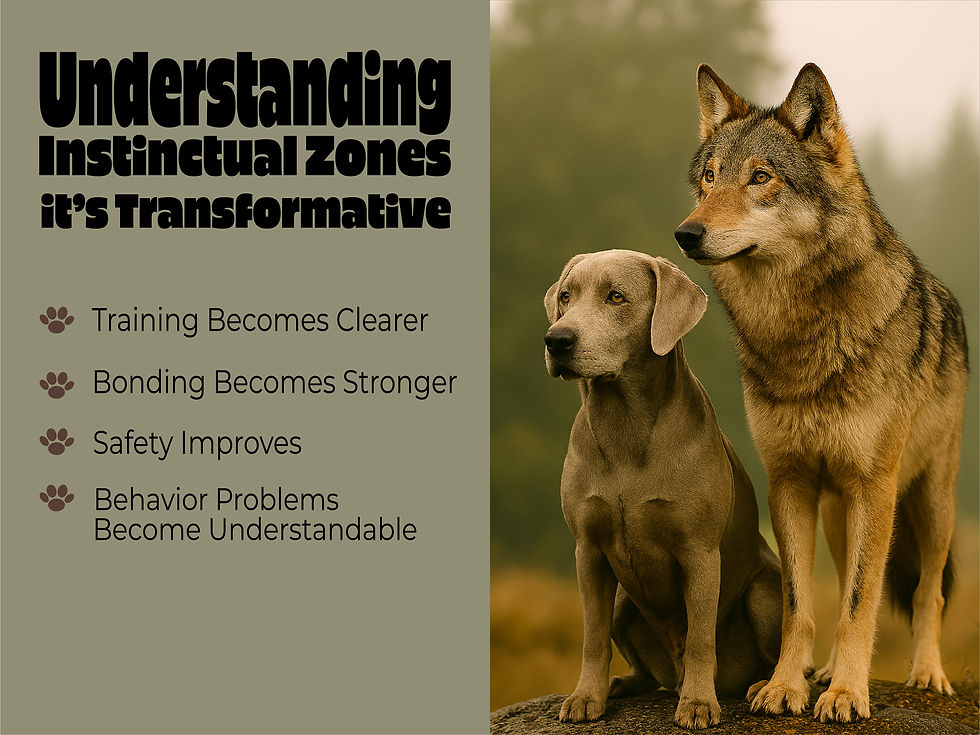
Understanding instinctual zones isn’t just interesting—it’s transformative.
Training Becomes Clearer
When you know which zone your dog is in, you can predict his emotional state and adjust your expectations.
Behavior Problems Become Understandable
Reactivity, guarding, or nervousness often stem from instinctual zone activation, not stubbornness.
Bonding Becomes Stronger
When you lead with clarity, your dog relaxes. When you understand his instincts, he trusts you more deeply.
Safety Improves
Recognizing when your dog is in a high‑alert state helps prevent conflicts with other dogs or people.
Conclusion: Your Dog’s Instincts Are a Gift, Not a Problem
Your dog is not a wolf—but he carries the wolf’s wisdom. His instincts are not flaws to correct but signals to interpret. When you understand the Public, Neutral, and Core Zones, you gain a map of your dog’s inner world.
You learn when he needs leadership, when he needs space, and when he feels safe enough to show his softest self. You learn how to guide him through unfamiliar environments, support him in shared spaces, and create harmony in the home.
Most importantly, you learn that your dog’s intuition is not random—it is the imprint of wolf behaviors driving his decisions today. And when you honor that intuition, you build a relationship rooted in trust, clarity, and deep connection.

Comments